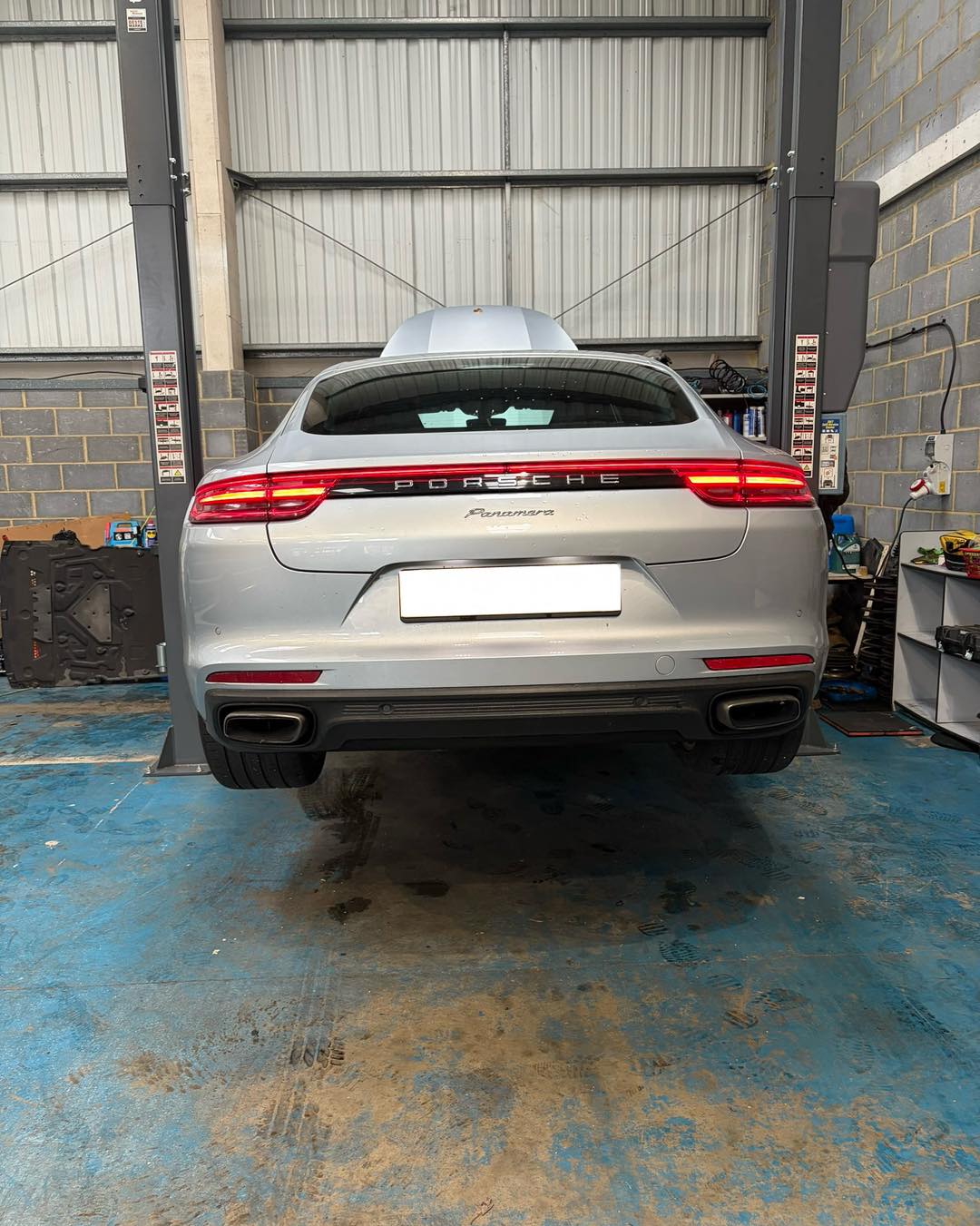
Inside the KITH workshop in Hackbridge at KITH Cars Garage & Bodyworks, Hackbridge

Major Service in Hackbridge, SM6

Major Service at our own workshop on London Road, a few minutes from Hackbridge station. Most cars around here do short local journeys, which changes what needs doing — so we service to how the car is used rather than to a generic list.

  • On London Road, SM6 — walk in
  • Mon–Fri 8am–8pm · Sat 8am–5pm
Loading instant quote…

What Hackbridge driving does between services

The typical Hackbridge car does short journeys. The station is a few minutes away and takes about 25 minutes off you to Victoria, the shops on the London Road parade are walkable, and the rest is a run to Sutton or Wallington and back. Very little of that gets an engine properly warm.

Short-hop driving changes what wears. Oil stays contaminated for longer because it never gets hot enough to drive off the moisture and fuel that collect in it, which is why a car doing 4,000 short miles a year can need its oil changed on time rather than on mileage. Batteries never fully recover their charge. Brake discs surface-rust between uses and get scored by it. Exhausts corrode from the inside out.

None of that is a reason to service more often for the sake of it. It is a reason to service on the right schedule for how the car is actually used, which for a lot of cars around here is the time interval rather than the mileage one. We will tell you which applies to yours rather than defaulting to whichever is further away.

It also means the inspection matters more than the oil. On a low-mileage local car the things that fail are the things that rot and seize rather than the things that wear out, and those are found by looking.

Whether a major is the right service for a Hackbridge car is worth a conversation rather than an assumption. The items that separate a major from an interim — fluids, plugs, the bigger filters — are mostly time-based rather than distance-based, which means a low-mileage local car reaches them on the calendar even though the odometer says otherwise.

The flip side is that a car doing one-mile station runs is not accumulating the kind of wear a major is partly designed to catch. We will go through which items yours actually needs now and which can honestly wait, rather than selling the whole list because it is the one with the biggest number next to it.

What we find on low-mileage local cars

  • Oil that is past it on time rather than mileage. Short journeys leave fuel and moisture in it, and no amount of low mileage fixes that.
  • Brake discs corroded at the edges. A car that sits for days between four- minute runs surface-rusts and never wears it back off.
  • Seized rear calipers and handbrake mechanisms. The classic low-mileage failure and a common MOT advisory around here.
  • Tyres aged out rather than worn out. Plenty of tread, sidewalls cracking. Age matters as much as depth.
  • Coolant and brake fluid never changed. Both degrade on time, not on distance, and both get forgotten on a car that barely moves.

Which is why the inspection matters more than the oil change on a car like this. What fails locally is what rots and seizes, and the only way to find those is to look.

Major Service: what’s involved

Some parts do their job quietly for years and then start costing money. Spark plug electrodes erode a fraction with every firing, and as the gap widens the ignition coil has to work harder to jump it, which is how a worn plug ends up taking a coil with it. A diesel fuel filter collects water and debris until flow through it falls away, starving a high-pressure pump built to very fine tolerances.

Brake fluid is hygroscopic: it draws moisture out of the air through the reservoir and the flexible hoses, and a few per cent of water is enough to pull its boiling point down towards where hard braking takes it. None of these three gives much warning before it becomes a problem. A major service renews them on schedule rather than after they fail, and it is the natural point to take stock of what is coming next.

From £249Written quote first
3–4.5 hoursTypical time in the workshop
3 monthsWorkmanship warranty

Signs your car is due a major service

Two years or 24,000 miles since the last one

The longer-interval items run to time as well as distance, so the date matters even on a car that has not covered the mileage.

Hesitation or a stumble under load

Worn plugs struggle most when cylinder pressure is highest, so the misfire shows up pulling uphill or accelerating hard rather than at idle.

Engine management light flashing

A flashing light means a misfire serious enough to risk damaging the catalytic converter with unburnt fuel. Ease off and get it looked at rather than carrying on.

Longer cranking on a cold morning

A petrol engine that takes an extra second or two to fire when cold is often running plugs with a gap that has widened past its best.

A diesel that runs out of puff at speed

Power that falls away after a sustained motorway run, or under load with the car fully laden, can be a fuel filter restricting flow just when demand is highest.

Water in fuel warning on a diesel

Many diesel filters include a water trap with a sensor. The warning means the trap needs draining and the filter is usually at or past the end of its service life.

Brake pedal softens on a long descent

Fluid that has absorbed moisture boils at a lower temperature, and the vapour compresses where fluid would not. A pedal that goes long after repeated heavy braking points at fluid rather than pads.

No record of plugs or fluid ever being changed

On a car bought used with a patchy history, assume the long-interval items are overdue until the paperwork shows otherwise.

When should it be done?

For most cars a major service falls every 24 months or 24,000 miles, but the parts inside it run to their own intervals and they do not all come due together. Spark plug life depends on the type fitted: nickel plugs are often specified every 20,000 to 30,000 miles, while platinum and iridium plugs can run 40,000 to 60,000 miles or more. Diesel fuel filters are commonly every 2 years or 20,000 to 40,000 miles. Brake fluid is a strict two-year item on most cars whatever the mileage.

  • Typically every 24 months or 24,000 miles, or at your manufacturer's longer interval
  • Spark plugs: around 20,000 to 30,000 miles for nickel, 40,000 to 60,000 miles or more for platinum and iridium
  • Diesel fuel filter: commonly every 2 years or 20,000 to 40,000 miles where the filter is serviceable
  • Brake fluid: every 2 years on most cars, counted by time rather than mileage
  • Low-mileage cars: the time-based items still fall due even when the mileage items do not

How we carry out a major service

  1. Work out what is actually dueBefore quoting we check your engine's schedule and the service record to see which long-interval items genuinely fall now. If your plugs were done 8,000 miles ago we say so and leave them alone.
  2. Oil, oil filter and the annual filtersEngine oil and filter are renewed with Castrol to your manufacturer's approval, and the air and cabin filters are replaced as they would be at a full service.
  3. Spark plugs on petrol enginesCoil packs come off and each plug well is checked for oil from failed tube seals before the new plugs go in. They are tightened with a torque wrench to the manufacturer's figure, because over-tightening damages an aluminium head and under-tightening stops heat escaping through the seat.
  4. Fuel filter on dieselsWhere the car has a serviceable external filter we renew it with the seals from the kit, drain the water trap and prime the system so the car starts without long cranking. Some cars use an in-tank filter that is not a service item, and we will tell you if yours is one of them.
  5. Brake fluid changeFresh fluid from a sealed container is pushed through with a pressure bleeder in the sequence the manufacturer specifies, and on cars that require it the ABS pump is cycled with diagnostic equipment so old fluid is not left in the unit.
  6. Wheels off and full inspectionPad and disc thickness are measured and recorded, and suspension joints, bushes, gaiters, hoses, pipes and the exhaust are checked with the car raised and the wheels off.
  7. Battery, charging and diagnosticsThe battery is tested for condition, the charging output measured, and the control modules scanned for stored and pending fault codes.
  8. Reset and recordThe service indicator is reset, the book stamped or the digital record updated as a major service, and the items now due next are noted, including the cambelt interval where your engine has one.
  9. Road test and handoverThe car is road tested with particular attention to pedal feel after the fluid change and to how the engine pulls after new plugs, then we go through the report and the measurements with you.

Parts and fluids we fit

Spark plugs are fitted to the exact type, heat range and gap your engine is specified for, from makers such as NGK, Denso or Bosch, and we do not substitute a plug because it looks similar or claims to be an upgrade. Fuel filters are OE or OE-equivalent from suppliers such as MANN, Bosch or Delphi, with the seals supplied in the kit. Brake fluid comes from a sealed container in the grade the car calls for, usually DOT 4 or DOT 4 low viscosity.

  • Castrol engine oil to your manufacturer's approval, with a new oil filter
  • Air filter and cabin filter of the correct type for the car
  • Spark plugs to the specified type, heat range and gap, from NGK, Denso or Bosch
  • Diesel fuel filter from suppliers such as MANN, Bosch or Delphi, with new seals
  • Brake fluid from a sealed container, usually DOT 4 or DOT 4 low viscosity
  • New sump plug washer and any single-use fixings the job calls for

How long it takes

3–4.5 hours

Allow most of a day with us. A four-cylinder petrol with accessible coil packs is quick; engines with more cylinders, plugs sitting under an inlet manifold, or a fuel filter mounted awkwardly under the car take considerably longer, and the brake fluid change adds around 45 minutes on top, more where the ABS pump has to be cycled. We will call you as soon as the car is finished.

What’s included

  • Everything in the full service: oil, oil filter, air filter, cabin filter and a wheels-off inspection
  • Spark plugs where your petrol engine is due them, torqued to specification
  • Fuel filter where your diesel has a serviceable one, with the system primed afterwards
  • Complete brake fluid change, with moisture content tested before and after
  • Diagnostic scan, service indicator reset and service record updated
  • Written report, road test and a 3-month workmanship warranty on any repair work

We are on London Road, which is the point

There is no journey to describe. We are at Unit 1 Soho Mills on London Road, which is the road you are already on — a couple of minutes from the station, the parade and the level crossing, and inside the SM6 postcode rather than a drive away from it.

That changes how you can use us, and it is worth saying plainly:

  • You can walk in. If something is making a noise, bring it down and we will look at it rather than booking you in for a week on Thursday to hear a description of it.
  • You can leave the car and walk home. Most of Hackbridge is ten minutes on foot from the yard, which removes the whole business of arranging a lift or waiting in a reception.
  • You can get to the station from us. If the car has to stay in, you are a few minutes from the platform rather than stranded.
  • We can look at it before quoting. Where a job needs the car on a ramp to price honestly, being local means that is a short detour rather than a second trip across town.

Being the workshop in the place rather than the workshop near it is most of why people use us. It is also why we would rather tell you something is not worth repairing than take the work — we are going to see you in the Co-op.

Open in Maps

Major Service in Hackbridge: your questions answered

My mileage is tiny. Do I still need a service?

Usually yes, on time rather than on mileage. Short local journeys contaminate oil faster than long ones and are harder on brakes and batteries, so a low-mileage Hackbridge car often needs the time interval rather than the distance one.

Will servicing here affect my warranty?

No. Servicing to the manufacturer’s schedule with the right parts and a proper record keeps a warranty intact. That is the legal position and has been for years.

Can I wait while it is done?

For shorter jobs, yes. For a full service most local customers leave the car and walk home, which is ten minutes from most of Hackbridge.

Where exactly are you in Hackbridge?

Unit 1 Soho Mills, London Road, SM6 7HN — a couple of minutes from Hackbridge station and the parade. There is room to leave a car with us.

Can I just turn up?

For a look at something, yes. For work that needs a ramp and a slot, call or put your registration into the box on this page first so we can give you a time rather than keep you waiting.

Price your major service now

Enter your reg and we’ll look up your car and price the job from our own labour rates and the book time for your model. Then book it in with a fixed written quote before any work starts.

  • Free, about 30 seconds, no sign-up
  • Parts, labour and VAT included
  • 3-month workmanship warranty
  • Collection from Hackbridge can be arranged
“It’s rare to find a garage you can truly trust. Fair price, brilliant customer service.”Thinushan K. · ★★★★★ Google

Prefer to talk? Call 020 4629 9469 or WhatsApp us.

Chat on WhatsApp