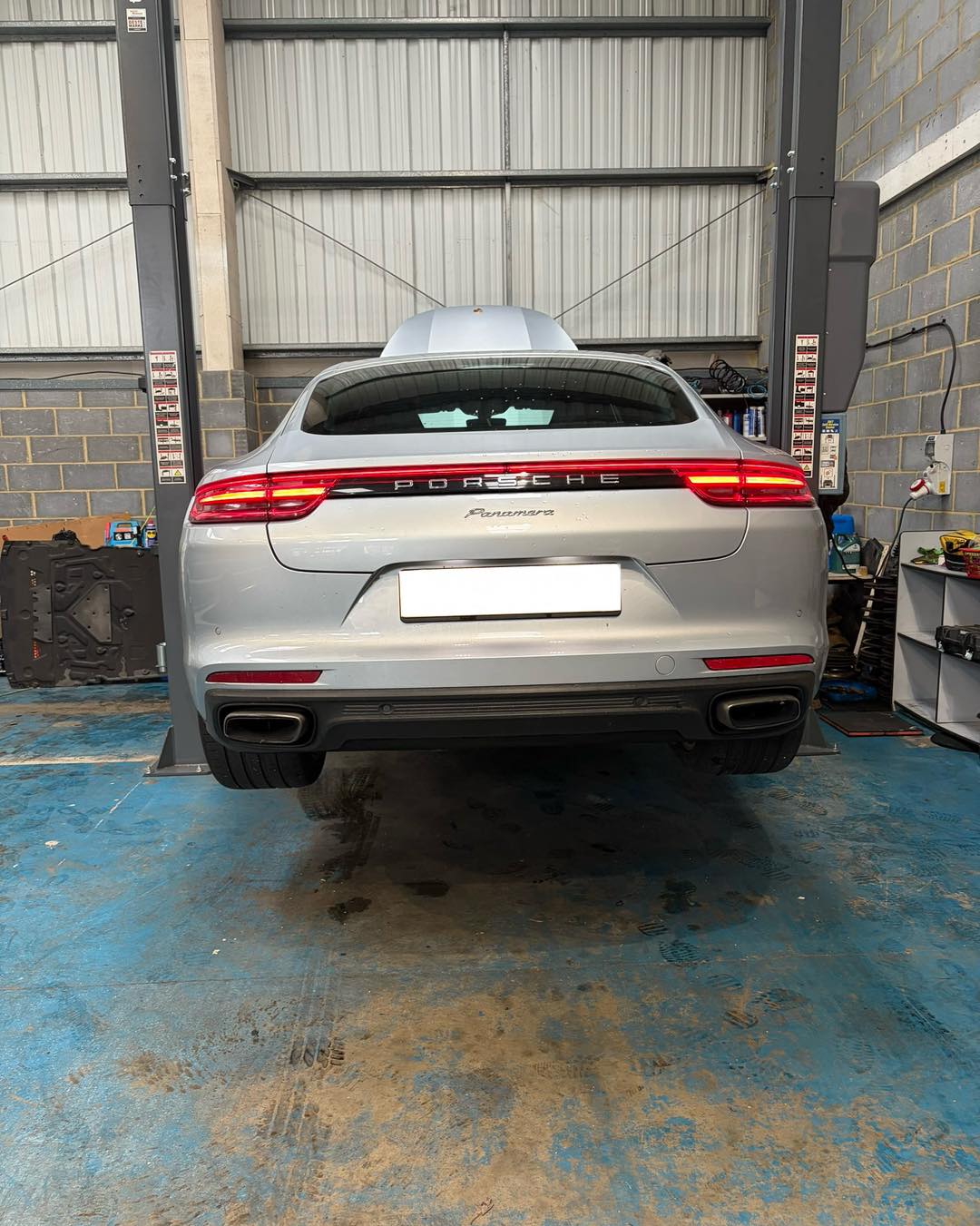
Inside the KITH workshop in Hackbridge at KITH Cars Garage & Bodyworks, Hackbridge

Headlight Restoration in Hackbridge, SM6

Headlight Restoration at our own bodyshop on London Road in Hackbridge. We are on no insurer panel, so the repairer is your choice and nothing we tell you is steered by an arrangement with one.

  • On London Road, SM6 — walk in
  • Mon–Fri 8am–8pm · Sat 8am–5pm
Loading instant quote…

Why Hackbridge produces the damage it does

Two things are happening to this place at once, and both end up on panels.

The first is the building. The old Felnex estate was about a million square feet of industry and, per the published figures for the Felnex and New Mill schemes, was approved in 2016 for 725 homes plus a supermarket, a surgery, a care home and a bus interchange. New Mill Quarter adds another 440. That is over eleven hundred homes going into a suburb whose central parade is Edwardian and was laid out for a fraction of the traffic, and it brings years of construction vehicles, delivery vans and contractor pickups through streets that were not drawn for them.

The second is where all those cars end up overnight. Sutton Council’s own ward parking survey for Wandle ward, which is Hackbridge, found 67 per cent of residents saying their street has a parking problem, 39 per cent parking on the street, and 74 per cent saying the trouble is on weekdays. A street parked solid on both sides is where mirrors get clipped, where doors get opened into the car alongside, and where a van reversing to a door takes a corner off something.

Which is why the bulk of what comes through our door from a hundred yards away is low-speed and cosmetic rather than dramatic. Scuffed bumpers, creased doors, kerbed wheels, mirror casings. Not motorway damage. Parked-up, built-up, somebody-was-in-a-hurry damage.

Before you decide whether to claim

  • Price it first. A single scuffed panel is often close to a typical excess, and claiming costs you the no-claims discount on top.
  • Check who you are claiming against. If nobody is identified, your insurer has nobody to recover from, so it goes down as a fault claim even though it was not your fault.
  • Notify either way. Most policies require it. Notifying is not claiming, and saying so on the call is worth doing.
  • Do not accept a roadside cash offer before you have a figure. They are reliably below what the job costs, and once accepted the way back is hard.

We will give you the repair number so you can do that sum properly. The other half of it comes from your insurer, and asking them directly is the only way to get it right.

Headlight Restoration: what’s involved

Headlamp lenses stopped being glass decades ago. Modern units use moulded polycarbonate, which is light and tough enough to survive a stone strike, but on its own it degrades badly in sunlight. The factory answer is a thin hard coat applied to the outer face, usually a siloxane or acrylic layer carrying ultraviolet absorbers. That coating, not the plastic, is what keeps a new lamp clear.

The coating has a finite life. Ultraviolet light, heat from the bulb behind it, motorway grit, harsh traffic film removers and the brushes in a rolling car wash all wear it thin, and once it breaks down the polycarbonate underneath begins to oxidise. That is what produces the familiar yellow-brown tint, the milky cloudiness and the fine network of surface cracks known as crazing. Light output drops as the surface scatters the beam, and the pattern thrown onto the road loses its sharp cut-off long before the driver notices how dim things have become.

From £49Written quote first
1–2 hoursTypical time in the workshop
3 monthsWorkmanship warranty

Signs your headlamps need restoring

Yellow or amber tint

The lens looks brown in daylight even after washing. This is oxidised polycarbonate, and no amount of cleaning will shift it.

Milky or foggy surface

A hazy film that feels slightly rough under a fingertip, worst on the upper face where the sun hits hardest.

Crazing

Very fine cracks across the outer surface, often visible only at an angle. They mean the hard coat has failed rather than simply worn.

Weak, scattered beam at night

The road ahead looks flat and the beam has no clean edge. A deteriorated lens can cut usable light output substantially.

Peeling coating

Patches where the original coating has lifted, leaving clear areas next to cloudy ones and a blotchy appearance.

An MOT comment about the lamp

Headlamps that are deteriorated badly enough to reduce light output are a defect, and a poor beam pattern will be noted at test.

Sandblasted lower edge

Cars that cover motorway miles pick up thousands of small stone strikes low on the lens, which pit the surface and dull it.

One lamp worse than the other

Common where a car is parked with one side facing the sun, or where one unit has been replaced at some point in its life.

When is restoration the right answer?

Restoration works when the damage is on the outer surface of an otherwise sound unit: yellowing, haze, light crazing, stone pitting. Address it as soon as the beam starts looking soft at night, because oxidation runs deeper the longer it is left and eventually cannot be sanded out without taking away too much material. It is also a sensible job before an MOT or before selling, since cloudy lamps make an otherwise tidy car look neglected from twenty feet away.

  • As soon as the lens looks yellow or hazy rather than clear
  • Before an MOT if light output or beam pattern looks poor
  • Typically from around five to eight years of age, sooner on a car parked outside
  • When the car is being prepared for sale
  • Not the right job at all if the unit is cracked, misted inside or has a failed reflector

How we restore a headlamp lens

  1. Assess the unitWe look at whether the fault is outside or inside. Condensation, a dull or peeling reflector, a damaged projector or a crack through the lens all rule restoration out, and we say so before taking any money.
  2. Clean and maskThe lens is washed and degreased, then the surrounding paint, bonnet edge, grille and trim are masked with tape so no abrasive touches bodywork.
  3. Cut back the failed coatingWet sanding starts with a coarser grade, commonly around 800, worked with plenty of water to remove the degraded coating and the oxidised layer beneath it.
  4. Refine through the gradesWe step through finer papers, typically 1200, 2000 and 3000, changing sanding direction at each stage so we can see when the previous grade's scratches have gone. Skipping a grade leaves marks that show through later.
  5. Machine polishA compound on a machine polisher brings the surface back to optical clarity and removes the last of the sanding haze.
  6. Prepare for coatingThe lens is cleaned with a suitable solvent wipe and dried thoroughly. Any residue left at this stage will show as a blemish under the clear coat.
  7. Apply UV-stable clear coatA two-pack clear or a dedicated UV hard coat is applied, which is the step that replaces the protection the sanding removed. Without it the bare polycarbonate will yellow again.
  8. Cure and inspectThe coating is left to cure properly before the car is handled, then the lens is checked in good light for runs, dust or missed areas.
  9. Beam check and handoverWe check the beam pattern and aim, unmask the car and explain how to look after the finish.

Materials and replacement units

The materials matter more than most people expect. We use graded wet-and-dry abrasives, a polishing compound suited to polycarbonate and a clear coat formulated with ultraviolet absorbers, because a general-purpose lacquer with no UV package will yellow along with the lens it is protecting. Where a unit is beyond saving, we source OE or OE-equivalent replacements carrying the correct E-mark for road use.

  • Wet-and-dry abrasive papers from around 800 through to 3000 grit
  • Polishing compound formulated for polycarbonate
  • Two-pack or dedicated UV-stable clear coat
  • Masking tape and film to protect paint and trim
  • OE or OE-equivalent replacement headlamp units where needed
  • Bulbs and lens seals where they are the underlying problem

How long it takes

1–2 hours

A pair of lamps usually takes one to two hours of work, plus curing time for the coating before the car is driven. Heavily crazed or deeply pitted lenses need longer at the coarser grades. We will tell you when you book whether to wait or leave the car for the morning.

What’s included

  • Assessment of whether restoration or replacement is appropriate
  • Full masking of surrounding paintwork and trim
  • Multi-stage wet sanding and machine polishing
  • UV-stable clear coat applied and cured
  • Beam pattern and aim checked afterwards
  • Aftercare advice on washing and protecting the finish

We are on London Road, which is the point

There is no journey to describe. We are at Unit 1 Soho Mills on London Road, which is the road you are already on — a couple of minutes from the station, the parade and the level crossing, and inside the SM6 postcode rather than a drive away from it.

That changes how you can use us, and it is worth saying plainly:

  • You can walk in. If something is making a noise, bring it down and we will look at it rather than booking you in for a week on Thursday to hear a description of it.
  • You can leave the car and walk home. Most of Hackbridge is ten minutes on foot from the yard, which removes the whole business of arranging a lift or waiting in a reception.
  • You can get to the station from us. If the car has to stay in, you are a few minutes from the platform rather than stranded.
  • We can look at it before quoting. Where a job needs the car on a ramp to price honestly, being local means that is a short detour rather than a second trip across town.

Being the workshop in the place rather than the workshop near it is most of why people use us. It is also why we would rather tell you something is not worth repairing than take the work — we are going to see you in the Co-op.

Open in Maps

Headlight Restoration in Hackbridge: your questions answered

Someone hit my car on my street and drove off.

Photograph it before you move it, ask about CCTV the same day, and look for paint transfer. Be aware the national untraced drivers scheme does not pay for vehicle damage unless somebody was significantly injured, so a no-injury hit and run usually comes down to your own policy or paying. Our guide pages go through it.

Do I have to use my insurer’s repairer?

No. The repairer is your choice on any claim. We are on no insurer panel, so nothing we tell you is steered by an arrangement with one.

Do you do paintless dent removal?

No. Every dent we repair is straightened and then painted and blended. On the dents PDR can fix a PDR specialist will be cheaper, and we would rather say so than take the work.

Where exactly are you in Hackbridge?

Unit 1 Soho Mills, London Road, SM6 7HN — a couple of minutes from Hackbridge station and the parade. There is room to leave a car with us.

Can I just turn up?

For a look at something, yes. For work that needs a ramp and a slot, call or put your registration into the box on this page first so we can give you a time rather than keep you waiting.

Price your headlight restoration now

Enter your reg and we’ll look up your car and price the job from our own labour rates and the book time for your model. Then book it in with a fixed written quote before any work starts.

  • Free, about 30 seconds, no sign-up
  • Parts, labour and VAT included
  • 3-month workmanship warranty
  • Collection from Hackbridge can be arranged
“It’s rare to find a garage you can truly trust. Fair price, brilliant customer service.”Thinushan K. · ★★★★★ Google

Prefer to talk? Call 020 4629 9469 or WhatsApp us.

What we actually see from Hackbridge

The damage that comes to us from a hundred yards away is overwhelmingly low-speed. Parked-car damage, in a suburb where 67 per cent of residents told the council their street has a parking problem and 39 per cent park on it.

  • Bumper corners and scuffed ends. Reversing into a gap on an Edwardian street that was laid out before anyone owned a car.
  • Door edge dings and creased doors. Cars parked close enough on both sides that there is no safe arc to open into.
  • Mirror casings. Taken off by a passing van on a road narrowed to one lane by parking.
  • Kerbed alloys. The commonest thing on the list, and the one most people put off longest.
  • Scrapes down one side. Usually a squeeze past something double-parked or a delivery lorry at the parade.

What we see far less of is the high-speed structural damage that comes off the A217 and the A232. Hackbridge sits off the main network rather than on it, which is good news for the severity of what happens here and no help at all to the state of the paint.

Chat on WhatsApp