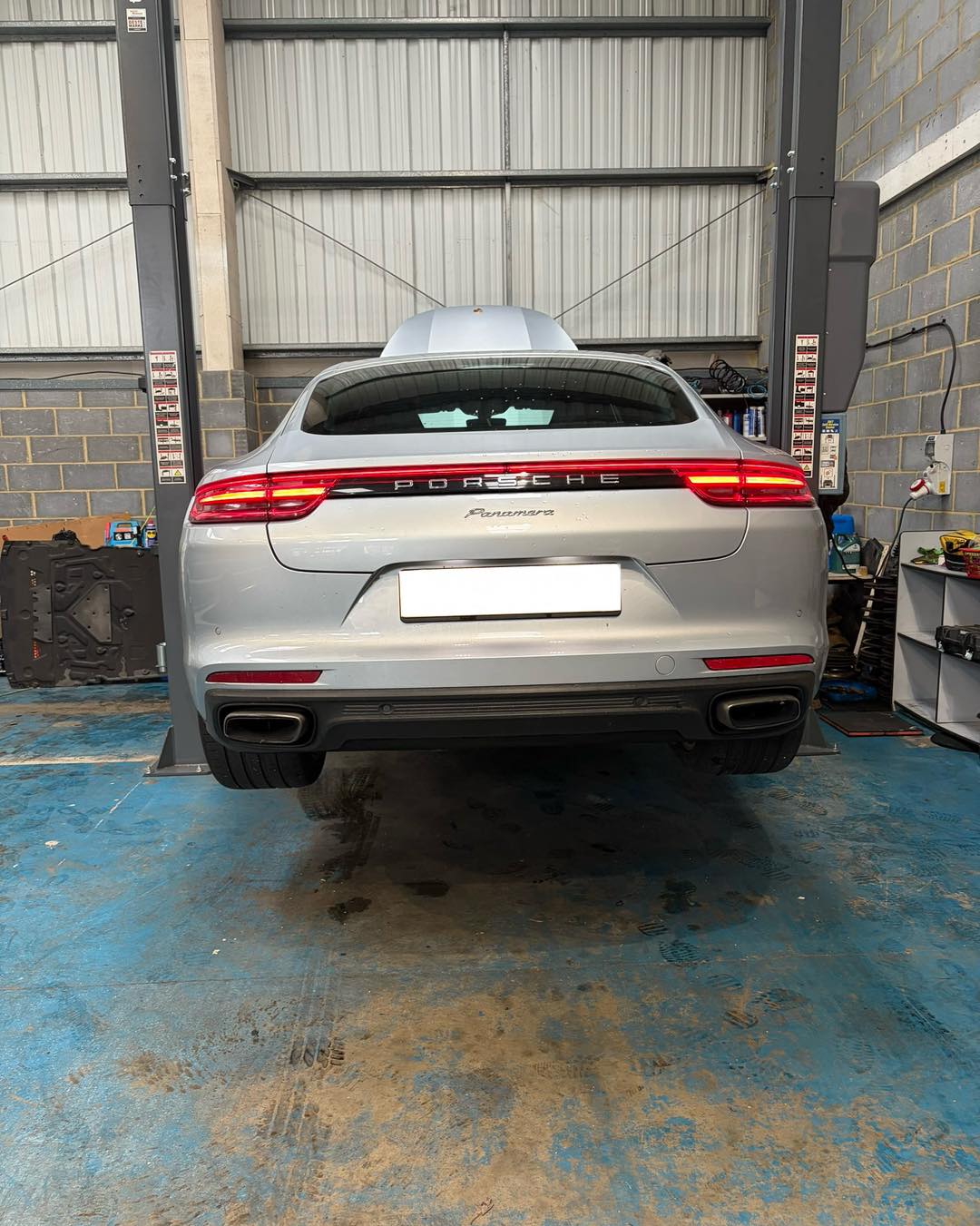
Porsche on the ramp in the Hackbridge workshop at KITH Cars Garage & Bodyworks, Hackbridge

Gearbox Repairs for Norbury Drivers on the A23

Norbury's section of the A23 is a red route of buses, signals and queues towards Thornton Heath Pond, which is hard, repetitive work for any gearbox. We are about 18 minutes away in Hackbridge and service, diagnose and repair manual, automatic and DSG gearboxes from £80.

  • ~18 min from Norbury
  • Mon–Fri 8am–8pm · Sat 8am–5pm
Loading instant quote…

Why A23 crawling shortens gearbox fluid life in Norbury

Norbury sits astride the A23, and the road decides much of what happens to its cars. Heading north onto Streatham High Road or south towards Thornton Heath Pond, traffic stops for bus stops, crossings and lights every few hundred yards. An automatic spends the trip moving between first, second and standstill, and the fluid never gets a steady, cool run. That is why we often find the fluid in Norbury cars darker and more tired than the mileage alone would suggest, even on cars that have been otherwise well looked after.

The hill up to Pollards Hill and the slopes around Norwood Grove add some load, but it is the red-route crawl that most affects dual-clutch gearboxes. Holding the car at walking pace makes the clutches slip, heat builds and adaptation values drift. Owners notice judder pulling away or a jerky creep near Norbury Hall and the shops on London Road. A diagnostic check shows whether it is oil, adaptation or clutch wear, and each has a very different cost, so guessing is expensive.

Private-hire drivers are common in Norbury, and for them a gearbox is a working tool. Many run hybrids or conventional automatics that are reliable if the fluid is kept right. The correct approved fluid matters more than people think. A universal fluid in a gearbox that needs a specific one can cause harsh shifts or slipping, so we always match the manufacturer's specification and set the level exactly as the gearbox requires.

Getting to us means leaving the A23 at the Lombard roundabout and heading west on the A236 across Mitcham Common, then south on Carshalton Road into Hackbridge. It is around 5.5 miles, and we can arrange collection if you would rather not spend the time in traffic. Every job starts with a written quote, and repairs carry a 3-month workmanship warranty.

Gearbox Services: what’s involved

Your gearbox uses sets of gears to match engine speed to road speed. A manual gearbox uses synchromesh rings to match gear speeds as you change, and runs in gear oil. An automatic uses a torque converter and hydraulic pressure, controlled electronically, to change gear, so the fluid is doing a hydraulic job as well as lubricating. Dual-clutch gearboxes such as VW's DSG combine two automated clutches with a mechatronic control unit.

Gearbox oil and automatic fluid break down with heat and time, and many gearboxes described as sealed for life will shift better and last longer with a fluid change at higher mileage. Most gearbox faults start small: a whine, a notchy change, a slow shift or a small leak. Diagnosing them early can often mean a fluid change, seal or linkage repair rather than a rebuilt gearbox.

From £80Written quote first
1–3 hoursTypical time in the workshop
3 monthsWorkmanship warranty

Signs your gearbox needs attention

Whining or humming

A whine that changes with road speed or in certain gears often points to worn gear or bearing surfaces, or low oil.

Crunching into gear

In a manual, grinding when changing, especially into second or third, usually means worn synchromesh. It can also be a clutch that is not releasing fully.

Jumping out of gear

A gear that pops out under load or on the overrun suggests worn selector components, detents or gearbox mounts.

Harsh, slow or slipping automatic shifts

Thumping into gear, delayed engagement into drive or reverse, or revs flaring between gears are common signs of worn fluid, low level or a valve body or solenoid fault.

Judder from a DSG at low speed

Shuddering when pulling away or creeping in traffic is a common dual-clutch complaint, caused by clutch wear, adaptation problems or mechatronic faults.

Gearbox warning light or limp mode

If the car sticks in one gear and shows a transmission warning, the control unit has detected a fault and is protecting the gearbox.

Oil leaks

Drips from the driveshaft seals, input seal or gearbox casing lower the oil level. Automatic fluid is often red or brown; manual gear oil has a distinctive strong smell.

Stiff or vague gear lever

A lever that is hard to move or feels loose is often worn linkage bushes or stretched gear cables rather than the gearbox itself.

When should a gearbox be serviced?

Service requirements vary more with gearboxes than with almost any other part of the car. Some manufacturers specify regular fluid changes, particularly on wet-clutch dual-clutch gearboxes, while others describe the fluid as lifetime fill. In practice, fluid that has done a very high mileage has lost much of its protection, and a planned change can help an older automatic shift smoothly. Any change in shift quality, new noise or a leak is a reason to have it checked rather than waiting for a service.

  • Wet-clutch DSG units such as the six-speed DQ250: oil and filter change at about 60,000 km (roughly 37,000 miles)
  • Conventional automatics: many specialists recommend a fluid change around 40,000–60,000 miles, even if listed as lifetime fill
  • Manual gearboxes: oil change at high mileage or when changes become notchy
  • Check immediately after any leak, harsh shift, slip or warning light
  • Check fluid level after any driveshaft or seal work

How we service and repair gearboxes

  1. Check-in and road testWe discuss the symptoms, then drive the car hot and cold to hear noises and feel shift quality in every gear.
  2. Diagnostic scanFor automatics and dual-clutch gearboxes, we read transmission fault codes and live data such as fluid temperature, clutch values and adaptation status.
  3. Level and condition checkWe check the oil level and condition, looking for burnt smell, discolouration or metal particles that indicate internal wear.
  4. Written quoteWe explain whether a fluid service, seal, linkage, mount or internal repair is needed, and quote in writing. If the gearbox needs rebuilding or replacing, we say so plainly.
  5. Drain and refillOld fluid is drained and the gearbox refilled with the correct oil to your manufacturer's specification. Filters are replaced on gearboxes that have them.
  6. Correct level at temperatureMany automatics must have their level set at a specified fluid temperature with the engine running. We follow the correct procedure for your gearbox.
  7. Adaptation resetWhere required, we reset or relearn the gearbox adaptations with diagnostic equipment so it shifts correctly with the new fluid.
  8. Road test and handoverWe road test through all gears, recheck for leaks and explain what we did and what to watch for.

Fluids and parts we use

Gearboxes are very sensitive to the fluid used, and the wrong oil can cause poor shifting or damage. We use gear oils and automatic fluids that meet your manufacturer's exact specification, including Castrol transmission fluids where they carry the right approval, and OE or OE-equivalent filters, seals and gaskets. For repairs we source OE-equivalent parts, and when a replacement gearbox is needed we can supply reconditioned or used units with the correct gearbox code.

  • Manual gear oil and automatic transmission fluid to manufacturer specification
  • Transmission filters and sump gaskets
  • Driveshaft and input shaft oil seals
  • Gear linkage bushes, cables and gearbox mounts
  • Reconditioned or used gearboxes matched by code when needed

How long it takes

1–3 hours

A manual oil change takes around an hour and an automatic or DSG fluid service 1–3 hours. Diagnosis and repairs vary, and a gearbox removal or replacement usually means leaving the car for 1–3 days.

What’s included

  • Road test and fault code scan
  • Fluid level and condition check
  • Correct specification oil or fluid
  • Filter replacement where fitted
  • Adaptation reset where required
  • 3-month workmanship warranty on repairs

From Norbury to our Hackbridge workshop

Take London Road (A23) south to Thornton Heath Pond, then Thornton Road (A23) to the Lombard roundabout and turn onto Mitcham Road (A236) westbound. Stay on the A236 as it becomes Croydon Road across Mitcham Common, then turn left at the roundabout onto Carshalton Road (A237), which becomes London Road through Hackbridge; Soho Mills is on the left. A shorter but slower residential route runs via Northborough Road and Pollards Hill to Mitcham Common.

Take the A23 south to Thornton Heath Pond and the Lombard roundabout, then the A236 west across Mitcham Common and Carshalton Road south into Hackbridge, around 18 minutes. Collection from Norbury can be arranged.

Directions from Norbury

About Norbury

Norbury is a largely residential suburb at the northern tip of the London Borough of Croydon, sharing the SW16 postcode with neighbouring Streatham; most of it lies in Croydon, with some parts on the Streatham side falling within Lambeth. It grew rapidly in the early 1900s, and its streets are mostly Edwardian and inter-war terraces and semis, including the London County Council's first cottage estate, with larger houses on the slopes of Pollards Hill. The A23 London Road forms the spine of the area and its main shopping strip, and it is often congested, while the side roads are quiet, 20mph and heavily parked. It is a family-orientated area with a busy, independent high street.

Places nearby: Norbury station, Norbury Park, Norbury Hall, Norwood Grove, Pollards Hill Park, Hermitage Bridge and Norbury Brook

Postcodes: SW16 · Mainly the London Borough of Croydon (Norbury and Pollards Hill, and Norbury Park wards), with some parts on its Streatham side extending into the London Borough of Lambeth

More about KITH for Norbury drivers

Gearbox Services in Norbury: your questions answered

Is it worth the drive from Norbury to Hackbridge just for a gearbox service?

Many drivers find it is, because we road test, scan and check the fluid before recommending anything and put the quote in writing. If the timing is awkward, we can collect the car from Norbury and return it.

My hybrid is used for private hire along the A23. Does its transmission need servicing?

Hybrid transmissions have fewer wearing parts than conventional automatics, but the fluid still ages with heat and constant stop-start use. We check it against the manufacturer's schedule and your mileage, then advise whether a change is due.

My automatic thumps into gear when I stop in traffic near Norbury station. Is that serious?

A harsh downshift as you come to a stop can mean aged fluid, a low level or a solenoid starting to fail. It is rarely an emergency, but it is worth diagnosing before it gets worse. We scan for codes and check the fluid first.

My automatic is sealed for life. Does it really need a fluid change?

The manufacturer may not list one, but fluid still breaks down with heat and use. Many transmission specialists recommend changing it around 40,000–60,000 miles. On a very high-mileage gearbox that has never had a change, we discuss the pros and cons before going ahead.

Does a DSG gearbox need servicing?

Wet-clutch DSG units such as the six-speed DQ250 have a scheduled oil and filter change, typically at about 60,000 km (roughly 37,000 miles). The seven-speed dry-clutch DQ200 does not have a routine oil change interval, but it can still develop clutch and mechatronic faults that we can diagnose.

Can you repair my gearbox or does it need replacing?

Many faults are outside the gearbox: linkages, mounts, seals, sensors or fluid. We rule those out first. If there is internal damage, we compare the cost of a rebuild with a reconditioned or used gearbox and explain both options.

Why does one fluid change not replace all the fluid in an automatic?

A lot of fluid stays in the torque converter and valve body when the gearbox is drained. A single drain and refill replaces only part of it, so on some gearboxes we recommend a second change after a short interval.

Is the noise from my gearbox or my clutch?

A noise that changes when you press the clutch pedal often comes from the release bearing, while a whine that changes with road speed in certain gears is usually inside the gearbox. A road test with a technician is the best way to tell.

Price your gearbox service now

Enter your reg and we’ll look up your car and price the job from our own labour rates and the book time for your model. Then book it in with a fixed written quote before any work starts.

  • Free, about 30 seconds, no sign-up
  • Parts, labour and VAT included
  • 3-month workmanship warranty
  • Collection from Norbury can be arranged
“It’s rare to find a garage you can truly trust. Fair price, brilliant customer service.”Thinushan K. · ★★★★★ Google

Prefer to talk? Call 020 4629 9469 or WhatsApp us.

Chat on WhatsApp